 ToolScan
Essential Plumbing Tools Every DIYer Needs for Basic Sink & Pipe Repairs
A dripping faucet under the kitchen sink, a loose toilet supply line, or a clogged bathroom drain trap shouldn’t require a $250 emergency plumber service call. With a handful of purpose-built basic plumbing tools and an understanding of how residential pipe connections work, you can handle the majority of common household leaks and fixture replacements yourself.
However, plumbing is one area where using the wrong tool leads to rapid catastrophe. Grip a decorative chrome slip-nut with tooth-heavy pipe pliers, and you’ll gouge the finish or crush the soft brass. Overtighten a plastic P-trap with an oversized wrench, and you’ll crack the threading and flood your cabinet.
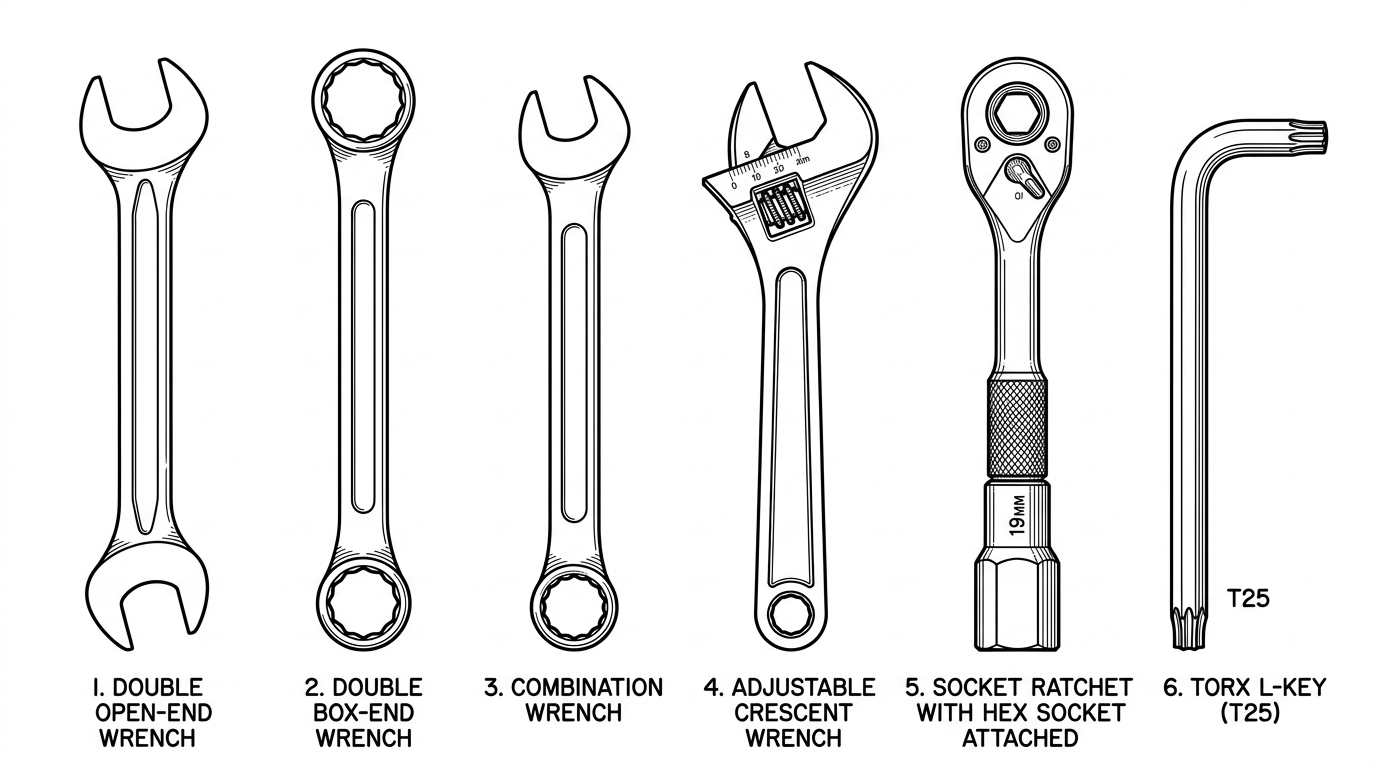
In this practical homeowner’s guide, we review the essential tools for sink repair and pipe maintenance, explain what each tool does, and detail how to complete repairs cleanly without damaging your fixtures.
The Anatomy of Household Sink Plumbing
Before picking up a tool, it helps to understand what lies beneath your sink:
- Water Supply Lines: Flexible braided stainless steel hoses or rigid copper/PEX tubes that deliver pressurized hot and cold water from the wall shutoff valves (angle stops) to the faucet shank.
- Faucet Mounting Nuts: Hard-to-reach brass or plastic locknuts securing the faucet body against the underside of the countertop.
- Sink Drain & Tailpiece: The threaded strainer assembly attached to the sink basin drain hole.
- P-Trap: The curved U-shaped pipe section designed to hold a standing barrier of water ("water seal"), preventing sewer gases from rising into your living space.
8 Essential Plumbing Tools for Home DIYers
1. The Basin Wrench (Faucet Spanner)
What It Is: A long vertical metal shaft featuring a spring-loaded, toothed jaw at the top that pivots 90 degrees or flips 180 degrees, operated via a sliding T-bar handle at the base.
Why You Need It: Replacing a bathroom or kitchen faucet is nearly impossible with standard wrenches. The mounting nuts are recessed behind the deep underbelly of the sink basin against the back wall. The basin wrench reaches vertically up into the narrow cavity to clamp onto the faucet locknut so you can rotate it comfortably from below.
Pro Tip: Look for a telescoping basin wrench whose shaft extends from 10 to 17 inches for deep apron-front or undermount sinks.
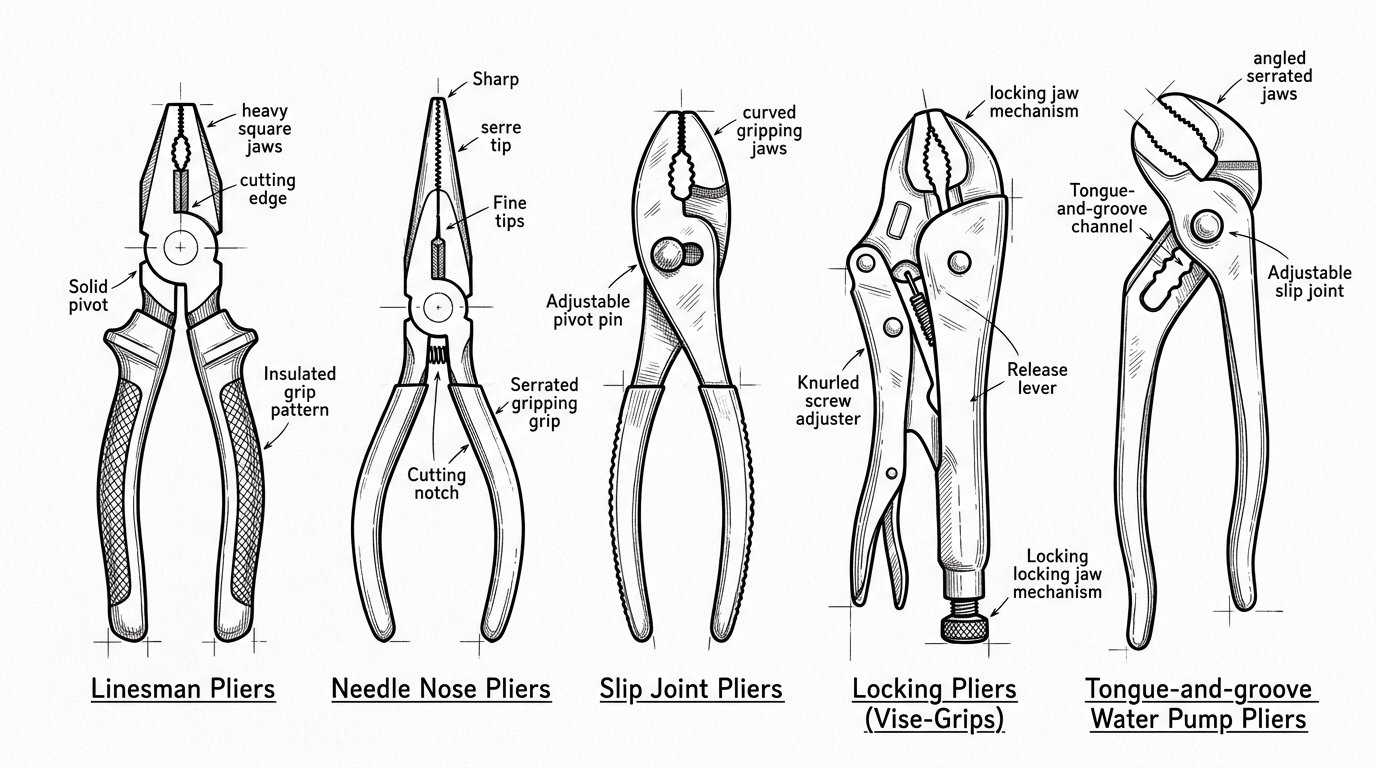
2. Smooth-Jaw & Tongue-and-Groove Pliers
What It Is: Adjustable-pivot pliers designed for wide openings.
Why You Need It: A standard 10-inch or 12-inch tongue-and-groove plier (often called Channellocks) is essential for holding large sink strainers and drain assemblies. However, for visible chrome-plated brass slip nuts, invest in smooth-jaw pliers (or pliers wrenches). Smooth jaws apply immense clamping leverage without serrations, preventing unsightly gouges on decorative fixtures.
3. Adjustable Pipe Wrench (10-Inch or 12-Inch)
What It Is: A heavy cast-iron or aluminum wrench with a spring-loaded floating hook jaw lined with aggressive, directional sawtooth ridges.
Why You Need It: Designed strictly for threaded iron, galvanized, or black steel pipes. The teeth bite into the round metal as you pull the handle.
Crucial Rule: Never use a pipe wrench on finished chrome, brass valves, or plastic drain nuts. Only use it on heavy iron piping, water heater nipples, or exterior threaded hose bibbs. Always use two wrenches when breaking pipe joints—one to turn the fitting and a second "backup wrench" to prevent twisting the upstream pipe inside the wall.
4. Close-Quarters Tubing Cutter (Copper Wheel Cutter)
What It Is: A compact C-shaped tool housing a hardened cutting wheel and opposing rollers adjusted by a knurled screw.
Why You Need It: When modifying copper water supply lines under a cabinet, hacksaws produce jagged, uneven cuts and shed copper shavings into the water line. A tubing cutter clamps over the pipe; rotating it while progressively tightening the knob produces a perfectly square, burr-free cut ready for push-to-connect (SharkBite) or compression fittings.
5. PEX Tubing Cutter & Crimper
What It Is: Scissor-action ratcheting or spring-loaded razor cutters designed to slice clean perpendicular cuts through cross-linked polyethylene (PEX) water tubing.
Why You Need It: PEX has largely replaced copper in modern residential plumbing due to its freeze resistance and flexibility. A specialized PEX cutter guarantees a square cut without crushing the tube out of round, ensuring watertight crimp or clamp ring seals.
6. Flaring & Swaging Kit
What It Is: A split clamping bar with sized die holes paired with a screw-driven cone drive.
Why You Need It: When repairing copper gas lines, refrigeration tubing, or high-pressure automotive lines, compression sleeves can leak. A 45-degree flaring tool expands the mouth of annealed soft copper tubing into a funnel flare that seats against a brass fitting with zero sealant required.
7. Hand Drum Drain Auger (Plumber’s Snake)
What It Is: A 25-foot flexible spring-steel cable wound inside a rotating canister drum with a bulbous corkscrew tip.
Why You Need It: Chemical drain cleaners corrode older pipes and rarely dissolve stubborn hair and grease blockages trapped beyond the P-trap. Feeding the drain auger into the wall drain pipe and spinning the drum allows the corkscrew tip to drill through or retrieve the obstruction mechanically.
8. PTFE Thread Sealant Tape & Pipe Joint Compound
What It Is: Polytetrafluoroethylene (Teflon) tape and non-hardening anaerobic paste (pipe dope).
Why You Need It: Threaded pipe joints (NPT) do not seal on their flats; they seal along the helical thread crests and roots. Wrapping PTFE tape clockwise 3 to 4 turns around male pipe threads lubricates the connection and fills micro-voids, guaranteeing a drip-proof seal.
Identify Plumbing Tools & Fittings with ToolScan
Unsure whether you are holding a compression sleeve puller, a deburring tool, or an internal pipe wrench?
Identify basin wrenches, pipe cutters, and flaring tools instantly.
With ToolScan, simply snap a photo on your smartphone. ToolScan's computer vision identifies the exact plumbing tool or fitting, provides specifications, and explains proper operating steps so you can tackle sink repairs with confidence.
Isuru writes practical guides on tool identification, safe usage, and maintenance, with a focus on AI-assisted learning.