 ToolScan
Electrical Hand Tools 101: Insulated Tools, Wire Strippers, and Testers
Working with residential electrical systems can be intimidating—and for good reason. Electricity is invisible, silent, and potentially lethal. While home wiring repairs like replacing a light switch, upgrading an outlet to GFCI, or wiring a new ceiling fan are straightforward DIY projects, they demand unwavering respect and the right set of basic electrical hand tools.
A common and dangerous mistake is assuming that standard hand tools with plastic-dipped handles protect you from electric shock. They do not.
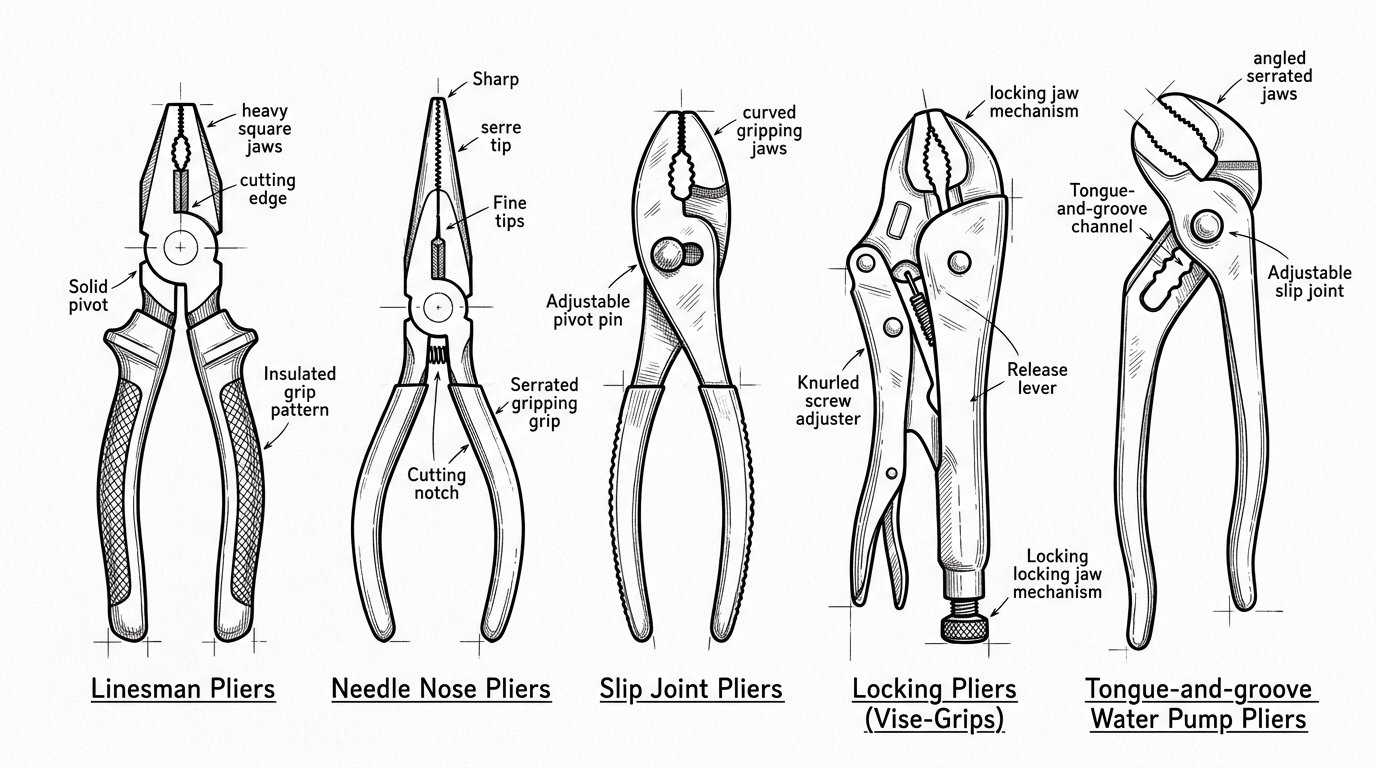
In this essential safety guide, we break down insulated tools for beginners, explain international dielectric standards, review the 8 core hand tools every DIYer and apprentice electrician must own, and outline critical safety checks to perform before touching any wire.
What Are 1,000V Insulated Hand Tools?
Pick up a common pair of hardware-store pliers: the handles typically have a thin layer of colorful dipped PVC plastic. This coating is engineered solely for hand comfort and grip—it is not tested or rated for electrical isolation.
True insulated tools meet rigorous international safety standards:
- VDE (Verband der Elektrotechnik): German testing institute standard recognized worldwide.
- IEC 60900 & ASTM F1505: Industrial standards requiring each individual tool to withstand a 10,000-volt dielectric bath test to qualify for an official 1,000-volt AC safety rating.
- Dual-Layer Warning Insulation: Certified insulated tools feature a thick, multi-layer coating. A bright yellow under-layer covered by a red outer layer alerts you instantly if a cut compromises safety.
8 Essential Electrical Hand Tools for DIYers & Apprentices
1. Non-Contact Voltage Tester (The "Tic Tracer")
What It Is: A pen-sized electronic sensor that detects electrostatic fields around AC live conductors without touching bare metal.
The Three-Point Safety Test: Always test your voltage detector on a known live circuit first, test the circuit you intend to service, and test the known live circuit a second time to ensure the tester battery didn't fail mid-test.
2. Multi-Gauge Wire Strippers & Cutters
What It Is: Precision-machined plier jaws featuring laser-ground circular cutting holes calibrated to standard American Wire Gauge (AWG) conductors.
Why You Need It: Stripping insulation with a knife risks scoring the copper core, which creates localized resistance hotspots that can ignite an electrical fire. Calibrated strippers strip insulation cleanly without nicking the copper.
3. Linesman Pliers (Electrician’s Side Cutters)
What It Is: Heavy, wide-jawed forged pliers engineered for high leverage.
Why You Need It: Linesman pliers twist solid conductors together into a tight, low-resistance mechanical spiral before capping with a wire nut. The hardened blades chop cleanly through thick Romex cable.
4. Certified Insulated Screwdriver Set
What It Is: Screwdrivers whose metal shanks are covered in dielectric insulation down to the final millimeters of the tip.
Profiles: Cabinet-tip slotted, Phillips #1 and #2, and square Robertson #1 and #2.
5. Digital Multimeter (CAT III / CAT IV Rated)
What It Is: A handheld electronic diagnostic meter measuring voltage, resistance, and continuity.
6. Diagonal Cutting Pliers (Dikes)
What It Is: Angled cutting pliers for trimming excess wire flush inside crowded junction boxes.
7. Spring-Steel Fish Tape
What It Is: Flat spring-steel tape on an ergonomic reel for pulling cables through wall cavities and conduit.
8. Cable Ripper (Romex Sheathing Slitter)
What It Is: A pocket-sized folded metal cutter that slits outer PVC sheathing without cutting inner conductors.
Verify Tool Safety & Wiring Specs with ToolScan
Unsure whether that old pair of pliers in your basement has certified insulation, or trying to identify an obscure terminal crimper or breaker disconnect?
Safety check on tool insulation ratings and usage directions before touching wiring.
With ToolScan, simply scan the tool with your phone camera. ToolScan’s machine-learning model instantly identifies the tool, displays its safety ratings and dielectric classification, and provides clear step-by-step instructions so you never take chances around electrical circuits.
Isuru writes practical guides on tool identification, safe usage, and maintenance, with a focus on AI-assisted learning.